
Why Removing Biofilm Is Essential for Preventing Contamination
Recent product recalls due to Salmonella in shell eggs, fruits and vegetables, and dairy ingredients highlight a growing challenge for food manufacturers: preventing the persistence of pathogens in the processing environment. Salmonella remains one of the leading causes of foodborne illness and continues to result in costly product recalls, increased scrutiny from regulatory authorities, and damage to brand reputations across the food industry.
While product analysis and environmental monitoring are essential, many recurring problems with Salmonella have a deeper root cause: biofilms and microbial refuge niches that conventional cleaning and sanitization programs fail to eliminate.
For food processors seeking to reduce the risk of contamination, improve their audit performance, and prevent recurring positive results in environmental monitoring, it is essential to understand the relationship between Salmonella and biofilms.
What causes persistent contamination by Salmonella in food processing plants?
Salmonella is particularly difficult to control because it can survive in areas throughout the plant that are difficult to clean, including:
- Drainage
- Floors and joints between floors and walls
- Equipment Mounts and Frames
- Conveyor Systems
- Cracks and fissures
- Wet processing environments
Once established, the pathogen can spread through water movement, staff traffic, contact with equipment, and cleaning and sanitizing activities. In many cases, facilities may appear clean at first glance yet still harbor persistent microbial contamination.
That is why positive results are often found in environmental monitoring, despite routine cleaning and sanitization efforts.
Why Environmental Monitoring Is Essential for Controlling Salmonella
A robust Environmental Monitoring Program (EMP) serves as an early-warning system to identify risks associated with pathogens before they reach the finished product.
An effective PMA must:
- Focusing on high-risk microbial refuges
- Analyze trends in results over time
- Investigate the root causes of positive results
- Verify the effectiveness of cleaning and sanitizing
- Support corrective and preventive actions
Rather than being viewed solely as failures, positive results from environmental monitoring can help uncover hidden sources of contamination and provide valuable information about the effectiveness of cleaning and sanitization.
What are biofilms, and why do they protect the Salmonella
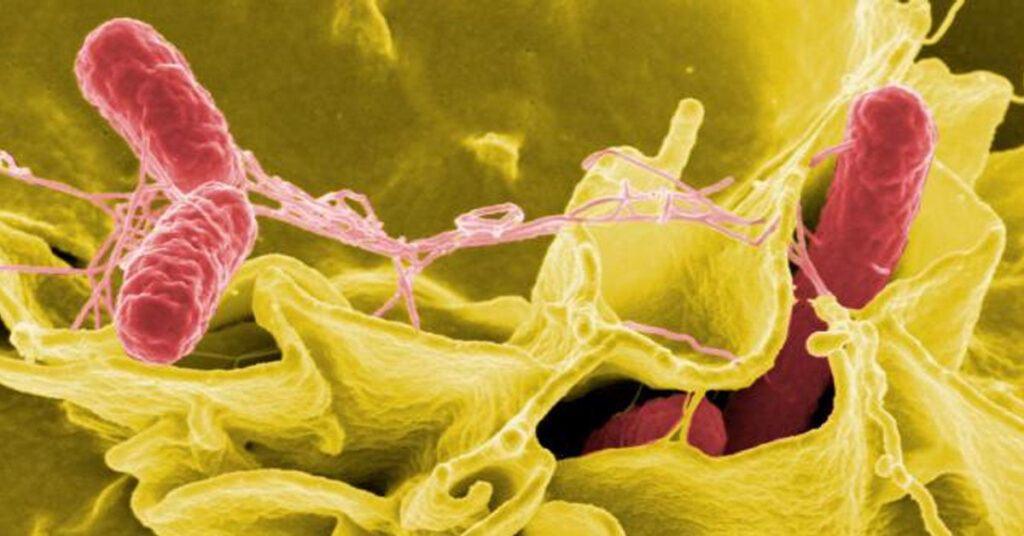
One of the biggest challenges in controlling Salmonella The fact is that this microorganism is rarely found as free-floating cells in food-processing environments. Instead, it typically becomes part of complex biofilms: communities of microorganisms protected by a matrix that they themselves produce and that adheres to surfaces throughout the processing plant.
Biofilms typically develop in:
- Drainage
- Conveyor belts
- Team Structures
- Floors and Walls
- Nutrient-rich wetlands
Biofilms pose a significant risk to food safety because they can:
- Protect the Salmonella and other pathogens found in sanitizers
- Increasing bacterial resistance to environmental stress
- Create long-term pollution reservoirs
- Contribute to consistently positive results in environmental monitoring
- Allow pathogens to survive for extended periods
Standard cleaning and sanitizing programs typically eliminate exposed bacteria but leave the biofilm structure intact. When this structure is not removed, the surviving microorganisms quickly recolonize the surfaces and cause recontamination. This is one of the main reasons why plants experience recurring detections of Salmonella, despite maintaining an apparently robust cleaning and sanitizing program. Effective control requires both the elimination of pathogens and the removal of biofilm.
Why Sterilex PerQuat® technology is the gold standard for biofilm control
Sterilex has a long history and is recognized as an industry leader in biofilm removal. The Sterilex PerQuat technology was developed to address one of the most persistent challenges in food safety: eliminating both biofilms and the pathogens that live within them.
Unlike conventional sanitizing formulations, which primarily target microorganisms on surfaces, PerQuat technology is designed to:
- Penetrating established biofilms
- Delete Salmonella and other pathogens harbored within the biofilm
- Breaking down the biofilm matrix
- Eliminate microbial refuges
- Help reduce the recurrence of biofilm
This two-pronged approach addresses both pollution and its root cause.
At plants that report recurring detections of Salmonella, the problem is often not the improper application of the sanitizer, but rather the continued presence of protected microbial communities in drains, equipment crevices, and other areas that are difficult to clean.
By targeting these hidden reservoirs, Sterilex PerQuat technology helps food processors achieve a higher level of environmental control and greater effectiveness in cleaning and sanitizing.
Concluding Remarks
Recent product recalls highlight the serious consequences of contamination from Salmonella: consumer illness, increased regulatory scrutiny, operational disruptions, and damage to brand reputation. While environmental monitoring is essential for identifying risks, long-term prevention depends on eliminating pathogen hiding places in the processing environment.
The most effective food safety programs recognize that biofilm control is not a supplementary activity, but rather a fundamental component of pathogen prevention. By combining comprehensive environmental monitoring with proven biofilm removal technologies, such as Sterilex PerQuat, food processors can shift from a reactive response to proactive control of Salmonella science-based.

 Español
 Português
 English